
Project · Power Supplies
Charge Pumps
Charge Pumps are an easy way to get dual power (bi-polar power) supply from a single 9 volt source or to get higher voltages out of 9 volts. Here are practical applications of the nice little charge pump circuits from the GEOFEX site. Both PCBs take a typical 9 volt input. The first one gives three stages of higher voltages from the 9 volt input. The second one gives bipolar 9 volt output. That is 9v+, 9v- and ground reference from a single 9 volt source or a single 9 volt battery. This is great for some of the Craig Anderton projects and any others that use bipolar power supplies.
Project files
Everything you need to build it
17, 25 or 33 volt power Ready-For-Transfer Printed Circuit Board mask
Schematic
Schematic
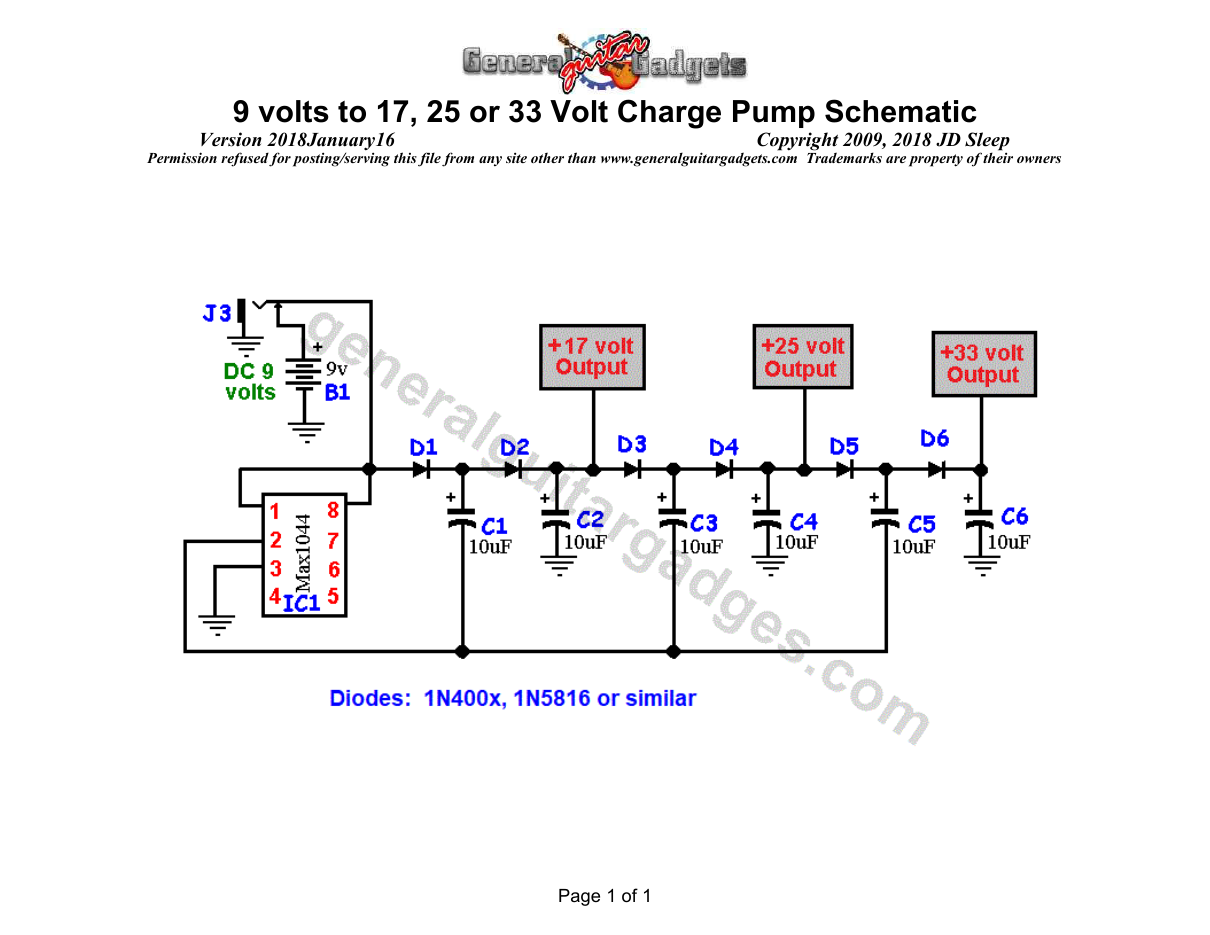
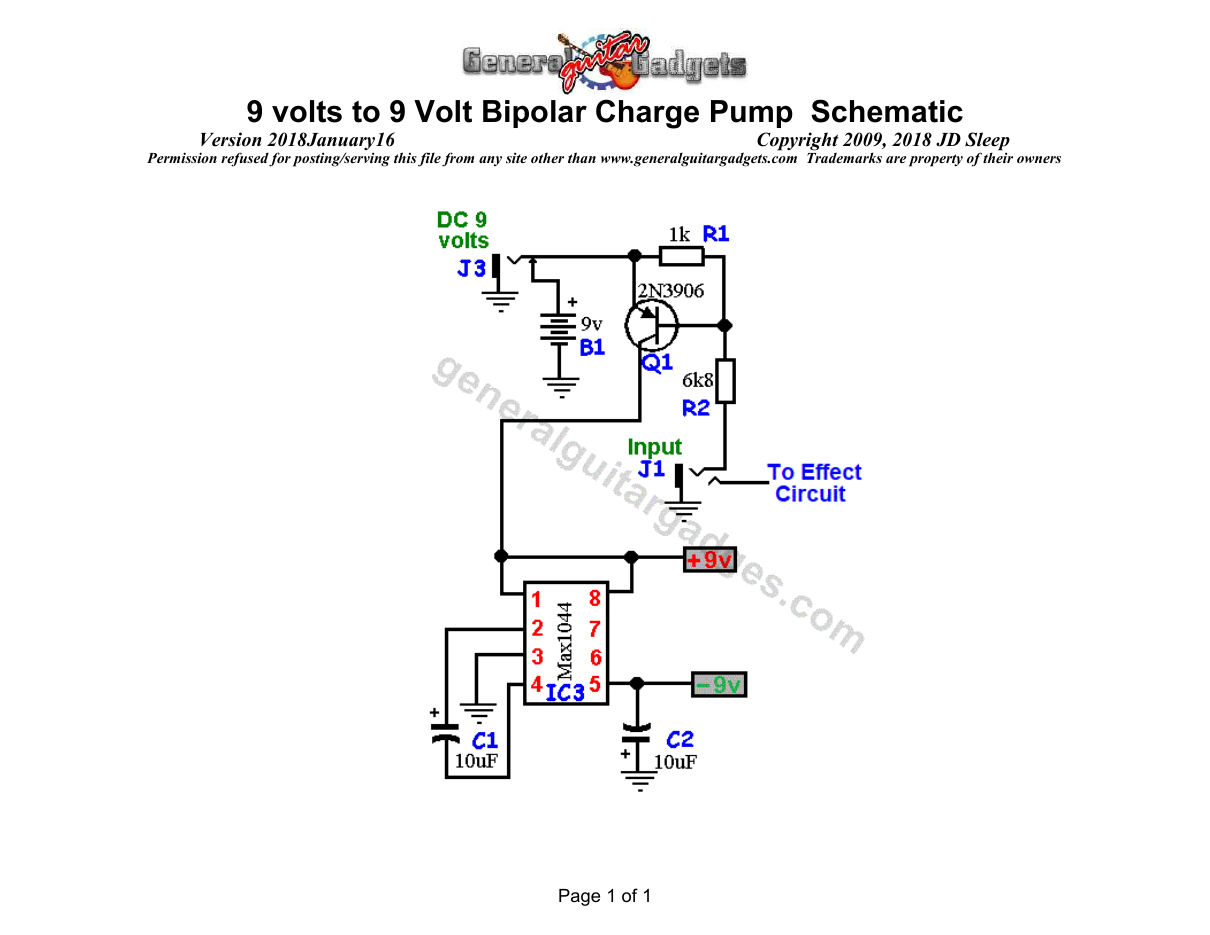
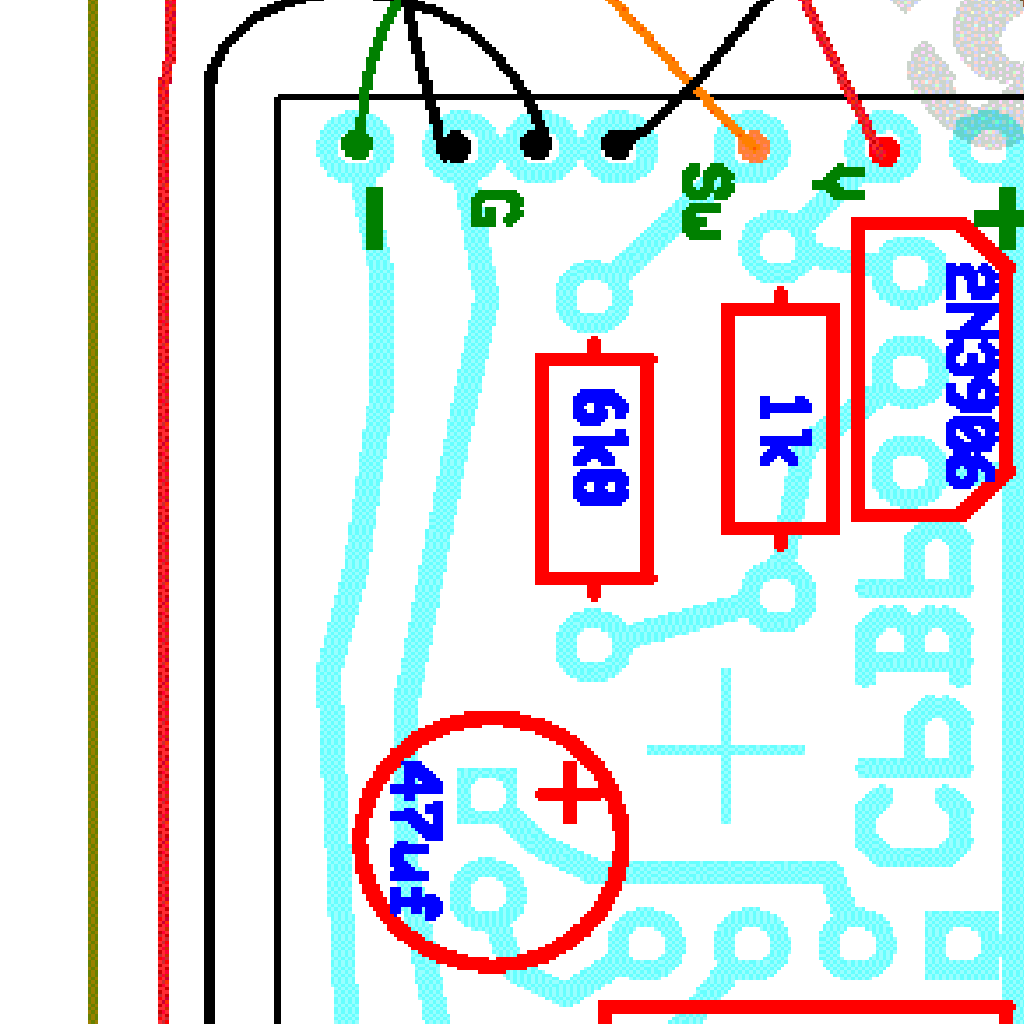
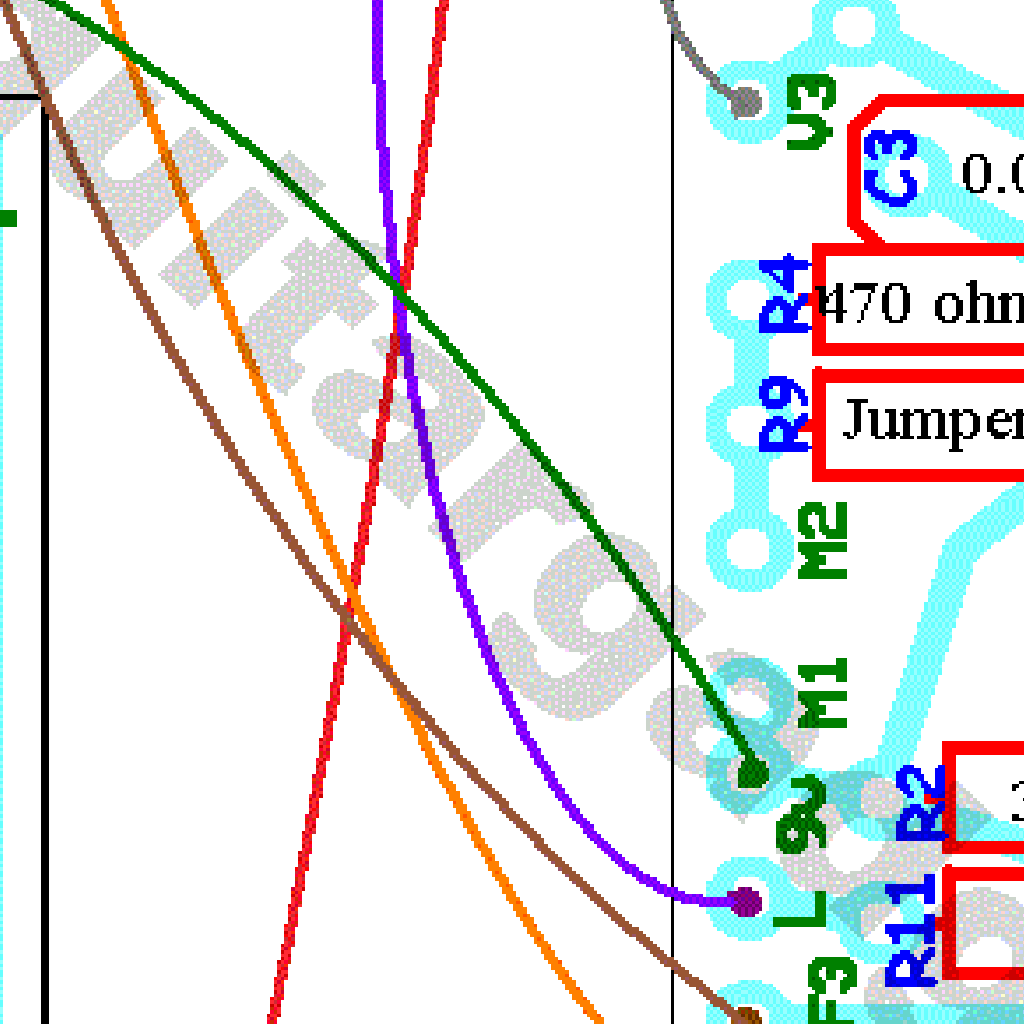
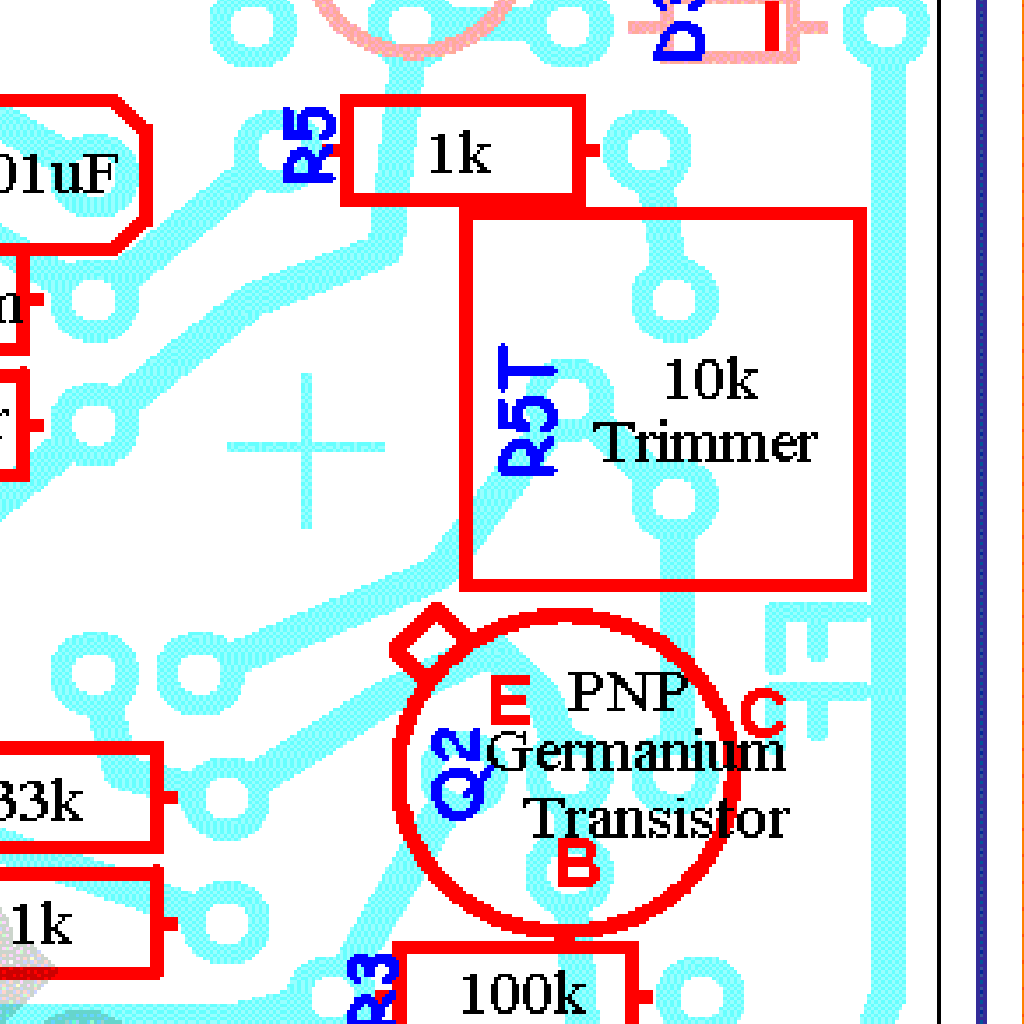
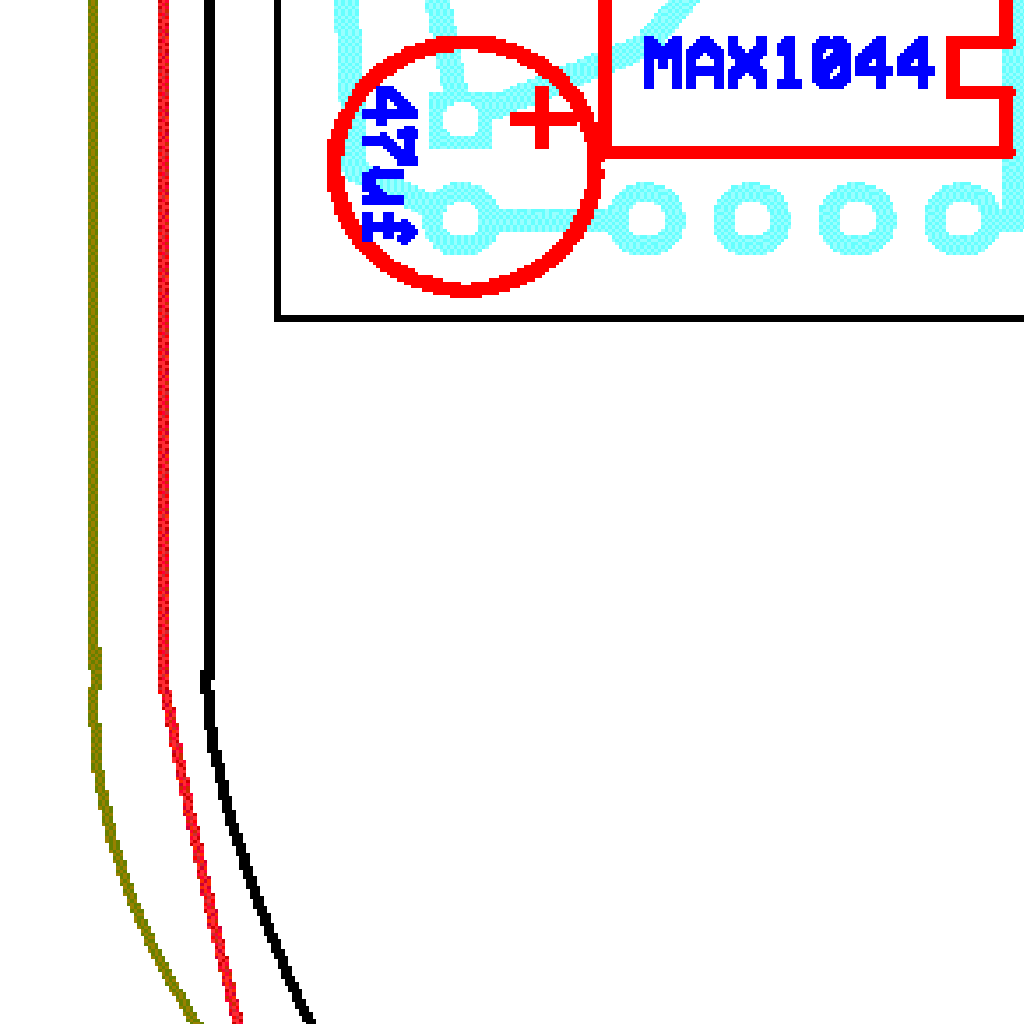
Parts layout
Parts Layout / Wiring Diagram
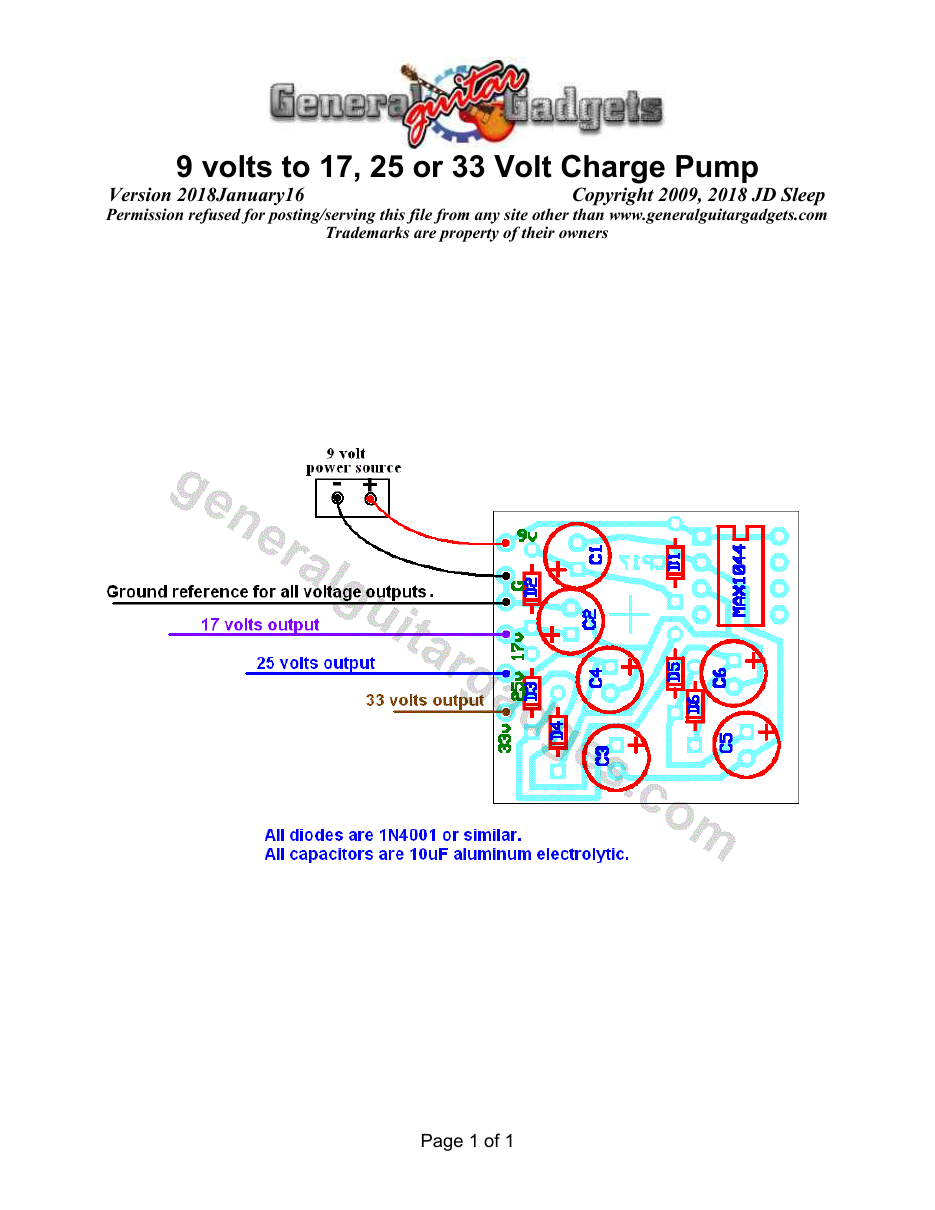
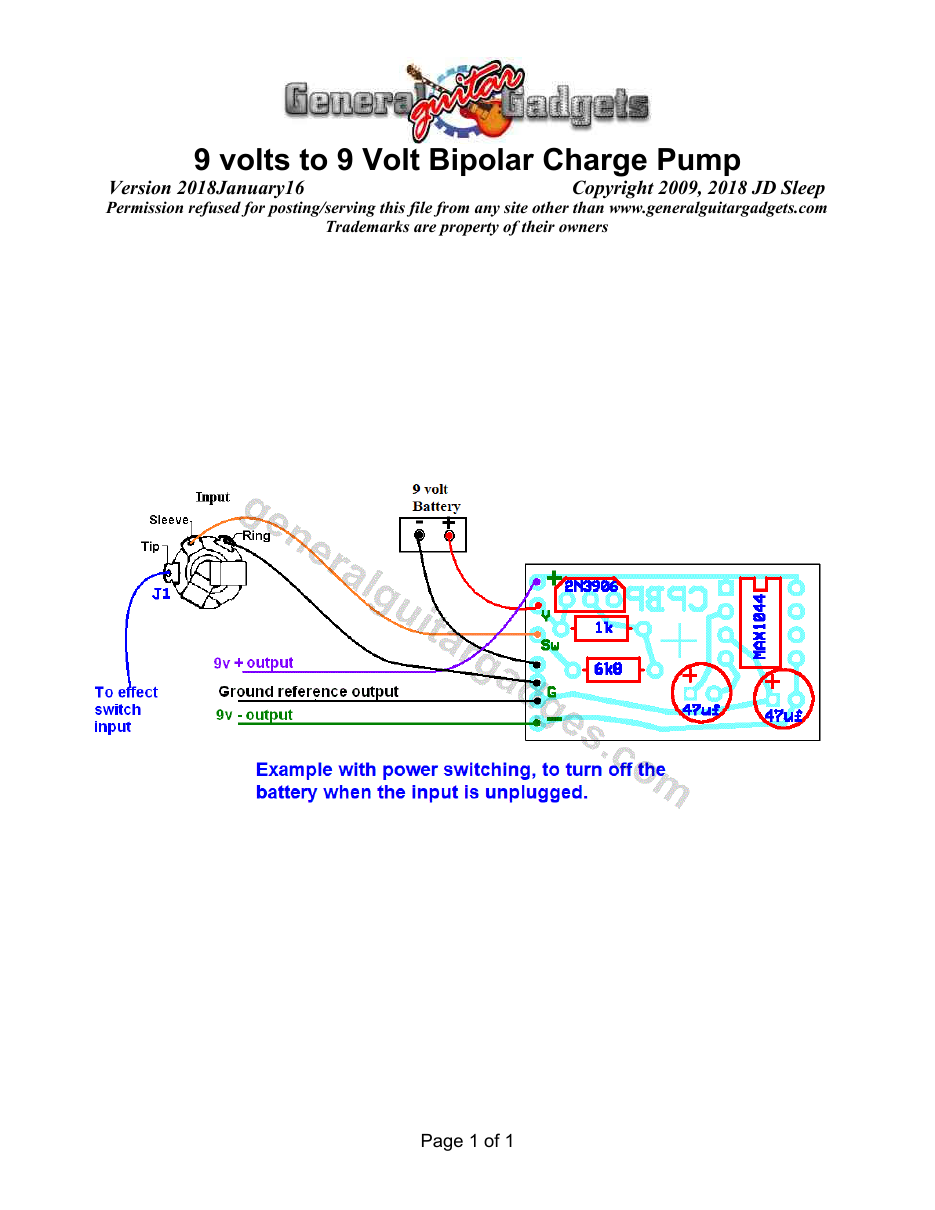
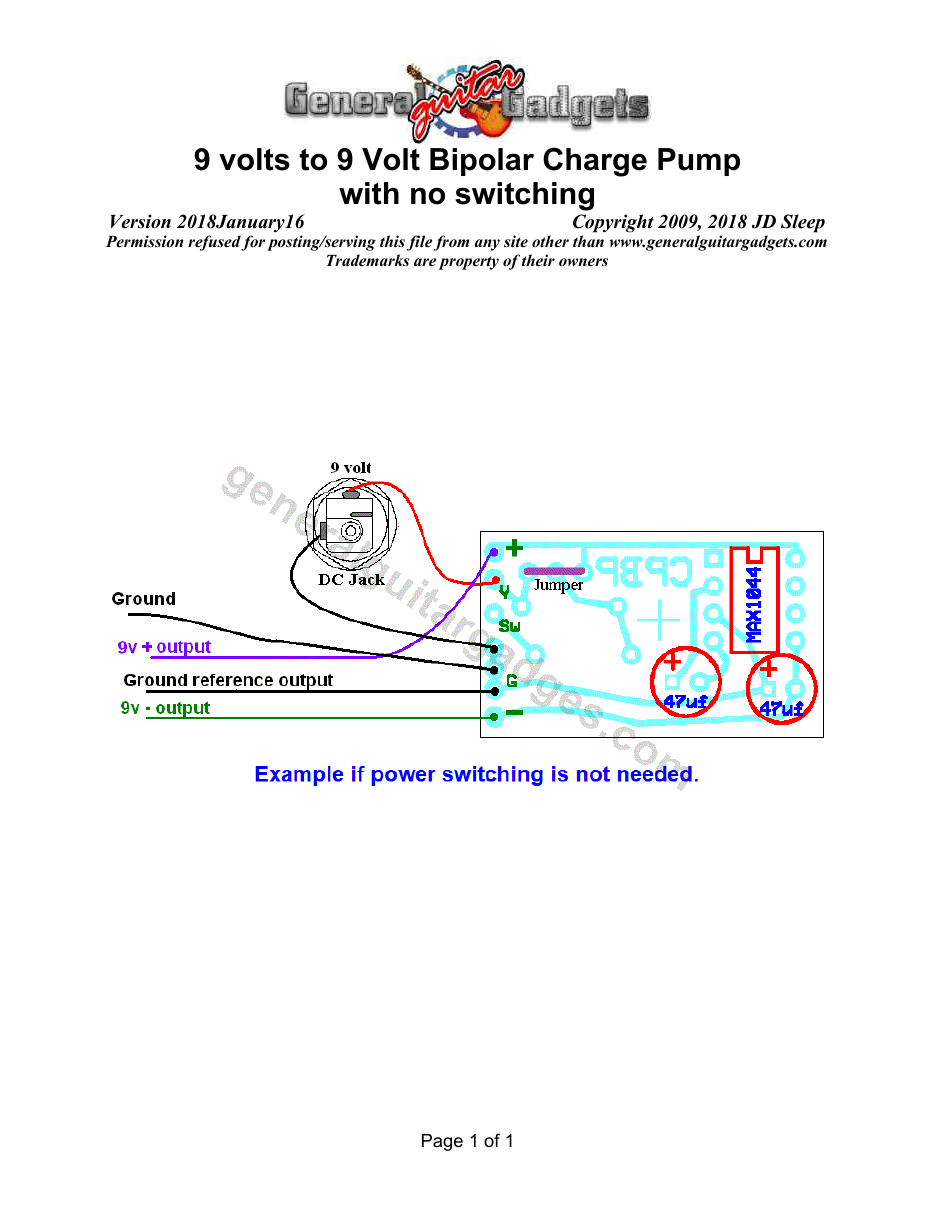
How to build it
Instructions
Negative ground power to a positive ground PNP Dallas Aribier Fuzz Face™ circuit.
Version 2014November19 · Copyright 2014 JD Sleep · Permission refused for posting/serving this file from any site other than www.generalguitargadgets.com · Trademarks are property of their owners
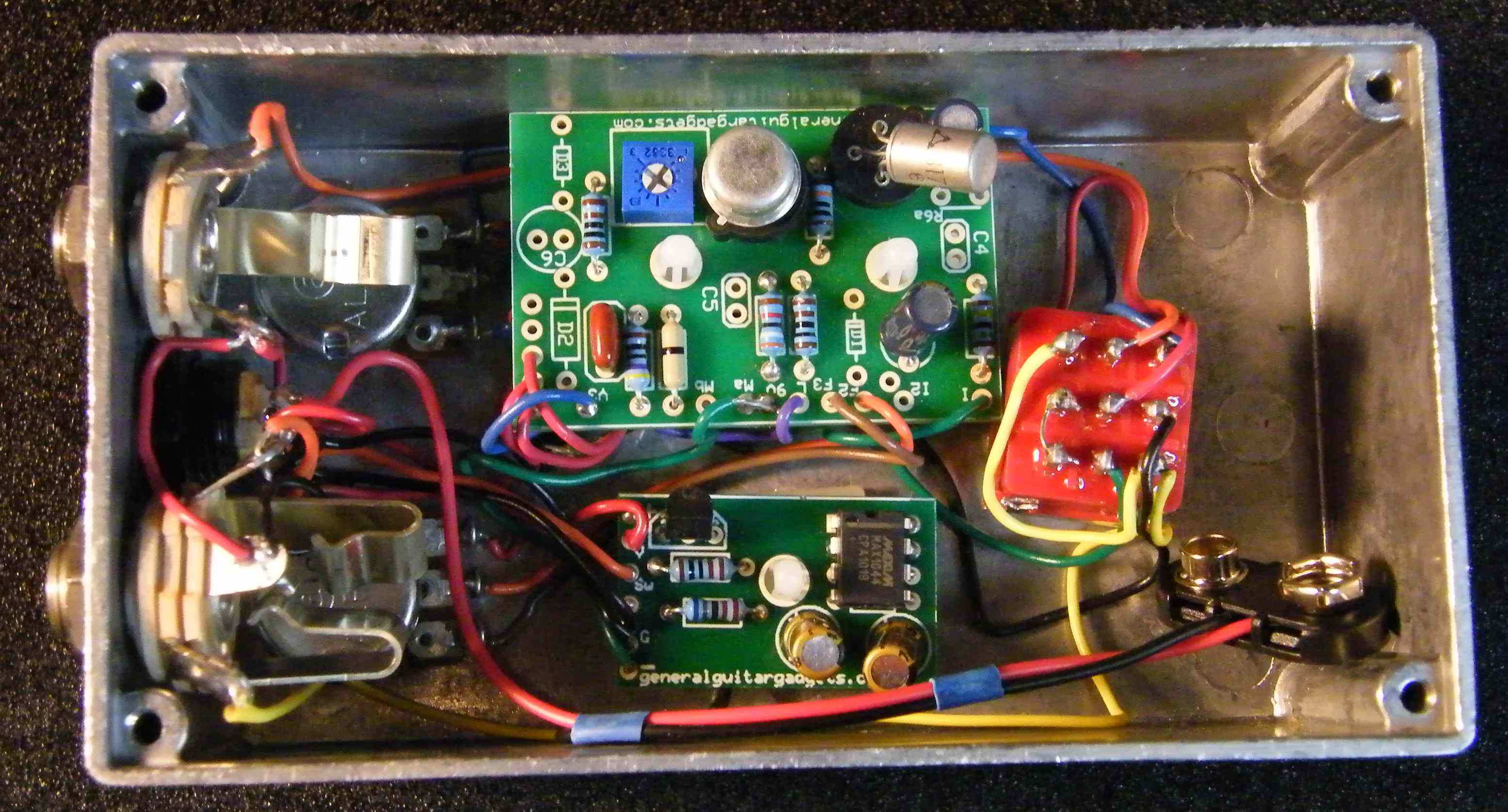
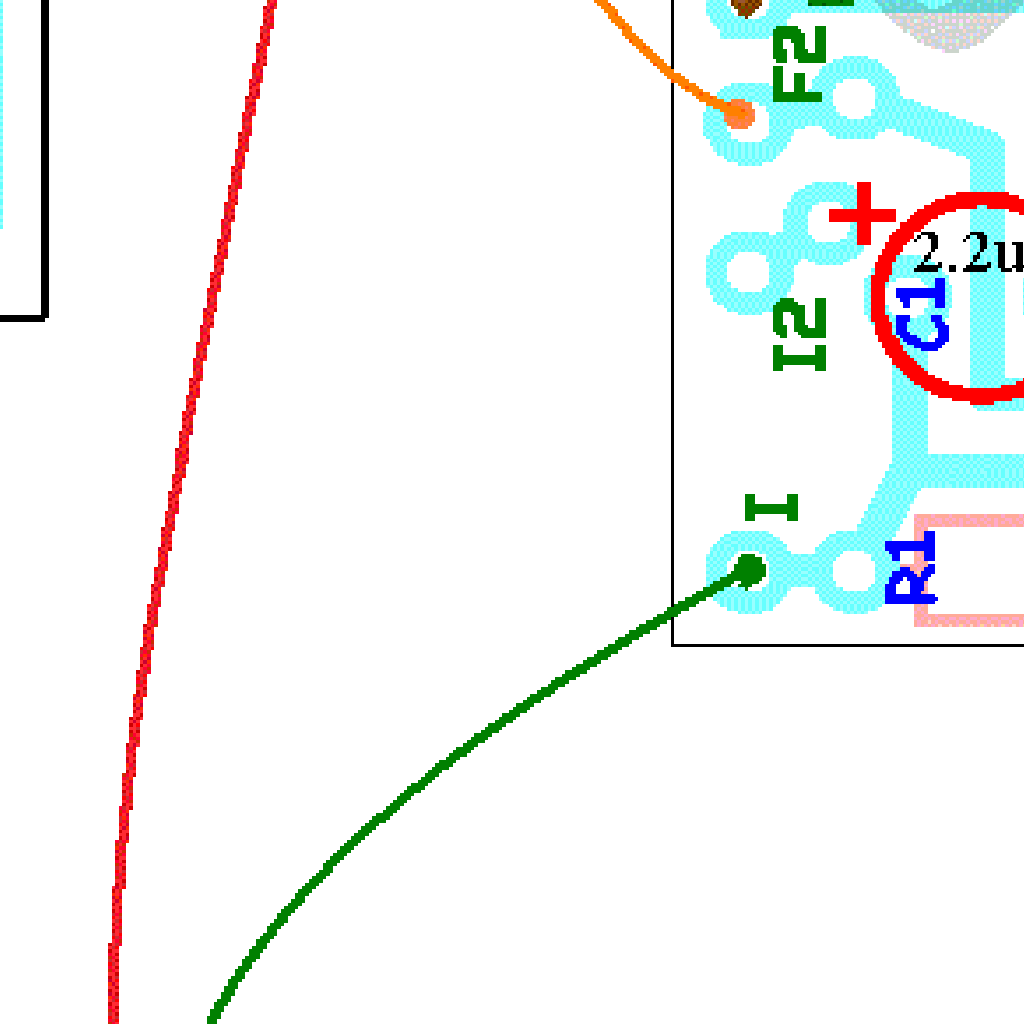
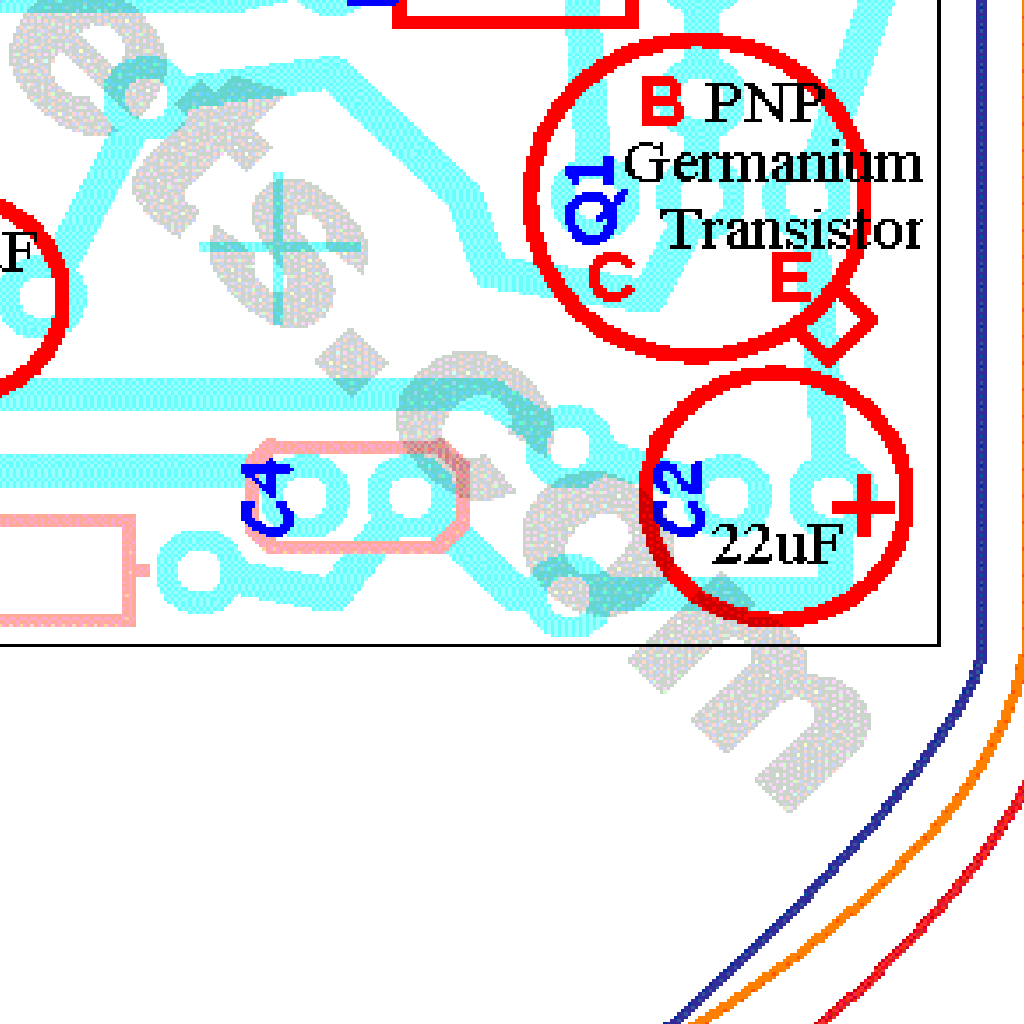
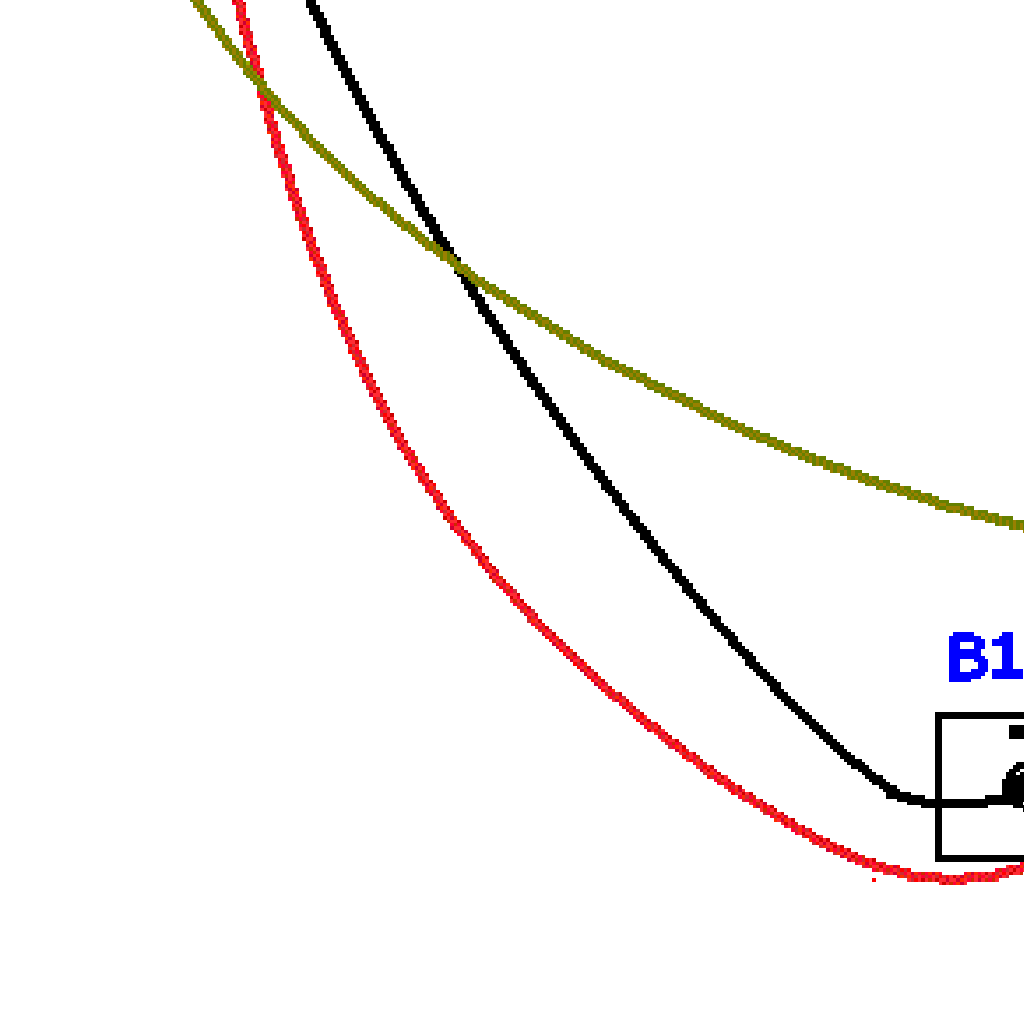
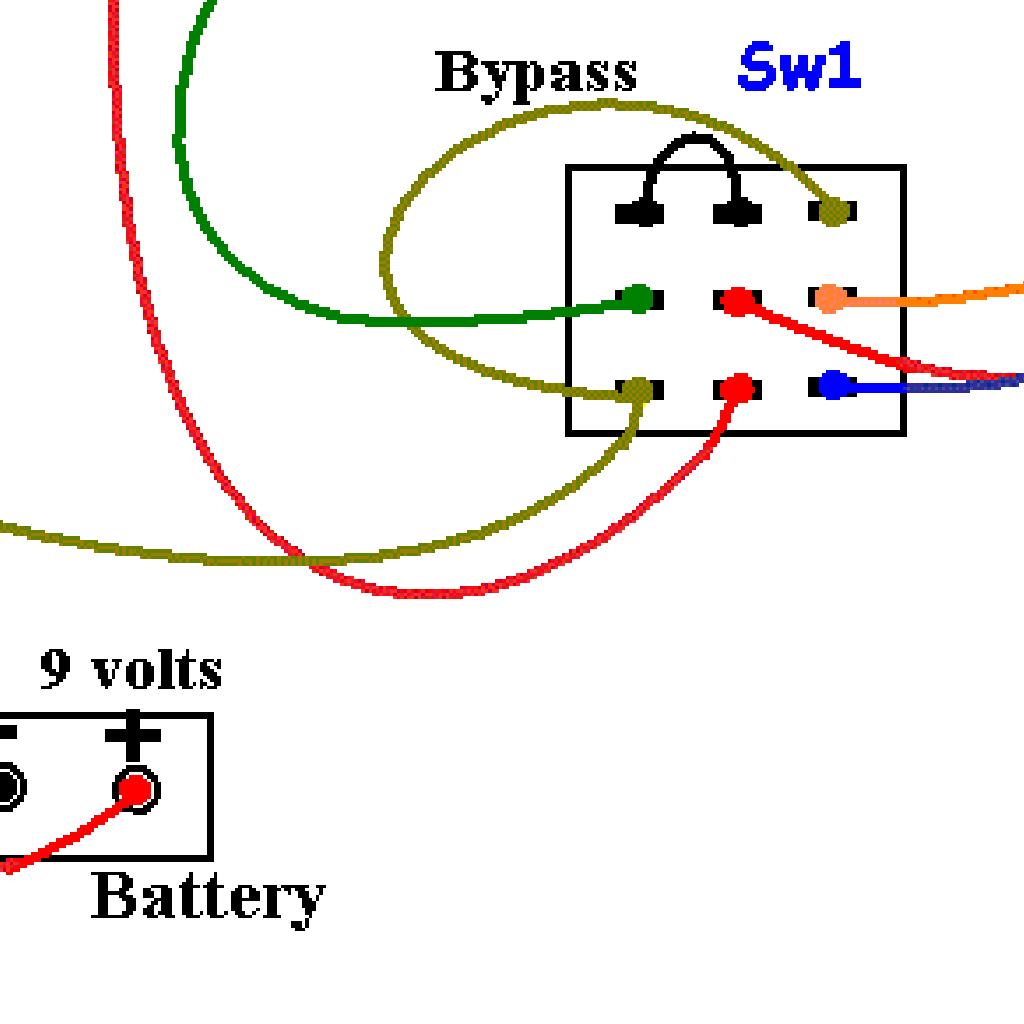
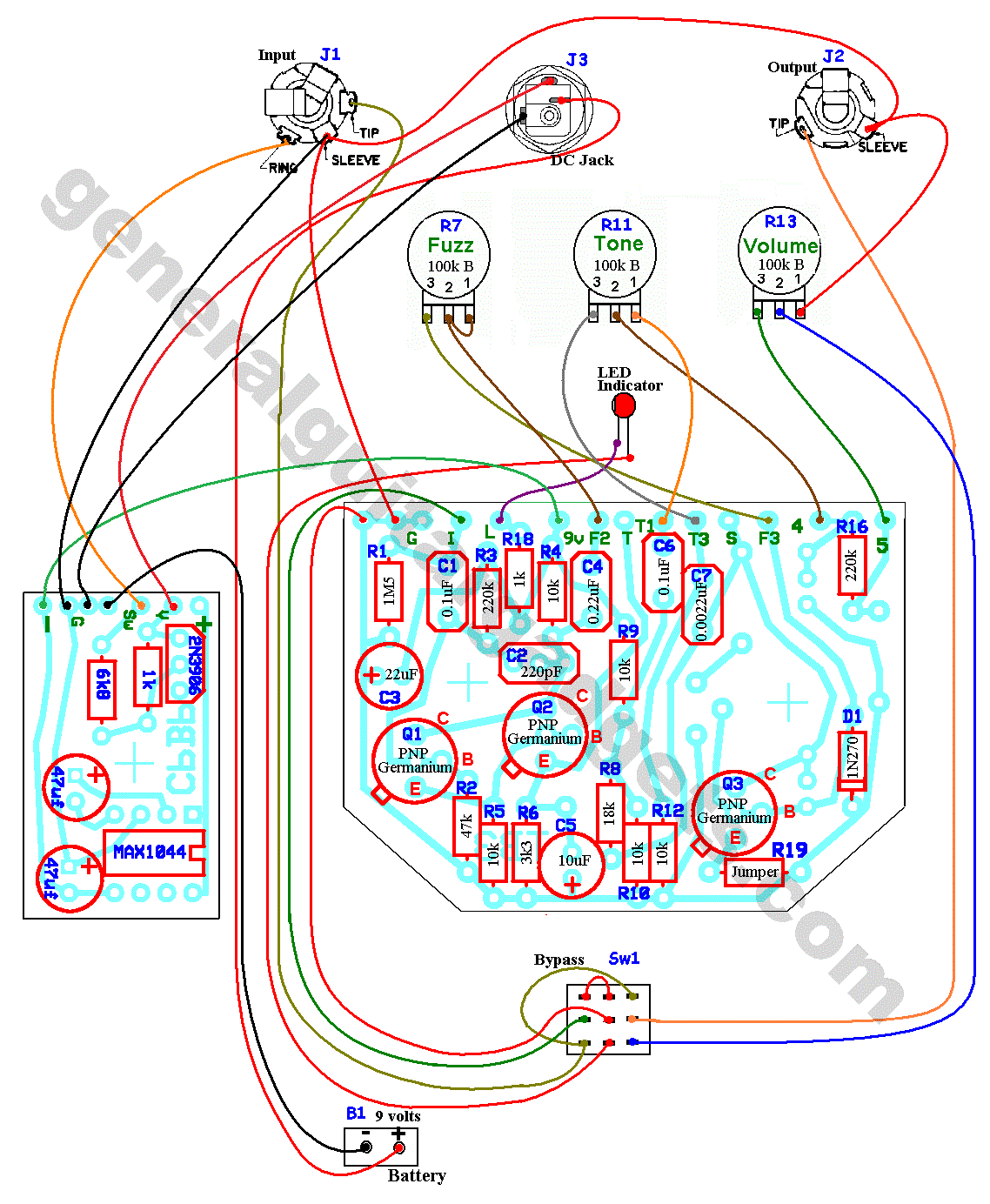
We ran across a forum post long ago where R.G. Keen suggested using a charge pump to convert the power input of a PNP circuit from positive ground to negative ground. This provides a solution for those of us who like to daisy chain a power supply to all of our stompboxes. If you've ever tried to daisy chain your modern pedals (Boss™, Ibanez™, etc) with a Fuzz Face™ (or an old 70's Big Muff Pi™ or any PNP transistor circuit pedal), you know you can't do it. Now you can! From the DC jack or battery, the charge pump circuit is a negative ground circuit. From the output of the charge pump circuit, we use the ground and -9v outputs to power the Fuzz Face™. The Fuzz Face™ circuit sees a positive ground (0v is more positive than -9v). So here is the solution for the FF5 PNP versions in diagram and photo. This is a great “wrapper circuit” to install and probably well worth the time in the long run. Here's a photo of a Dallas Arbiter™ type Fuzz Face™ replica with the charge pump.
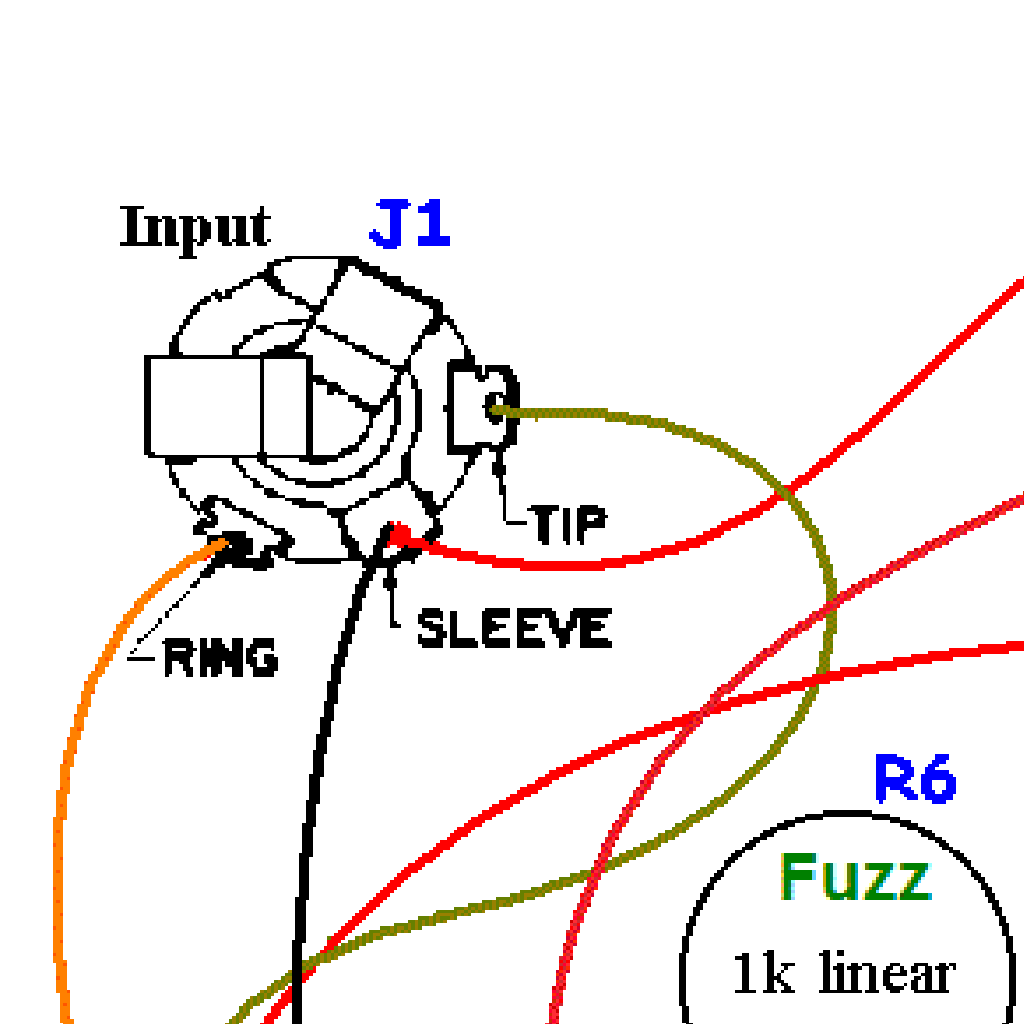
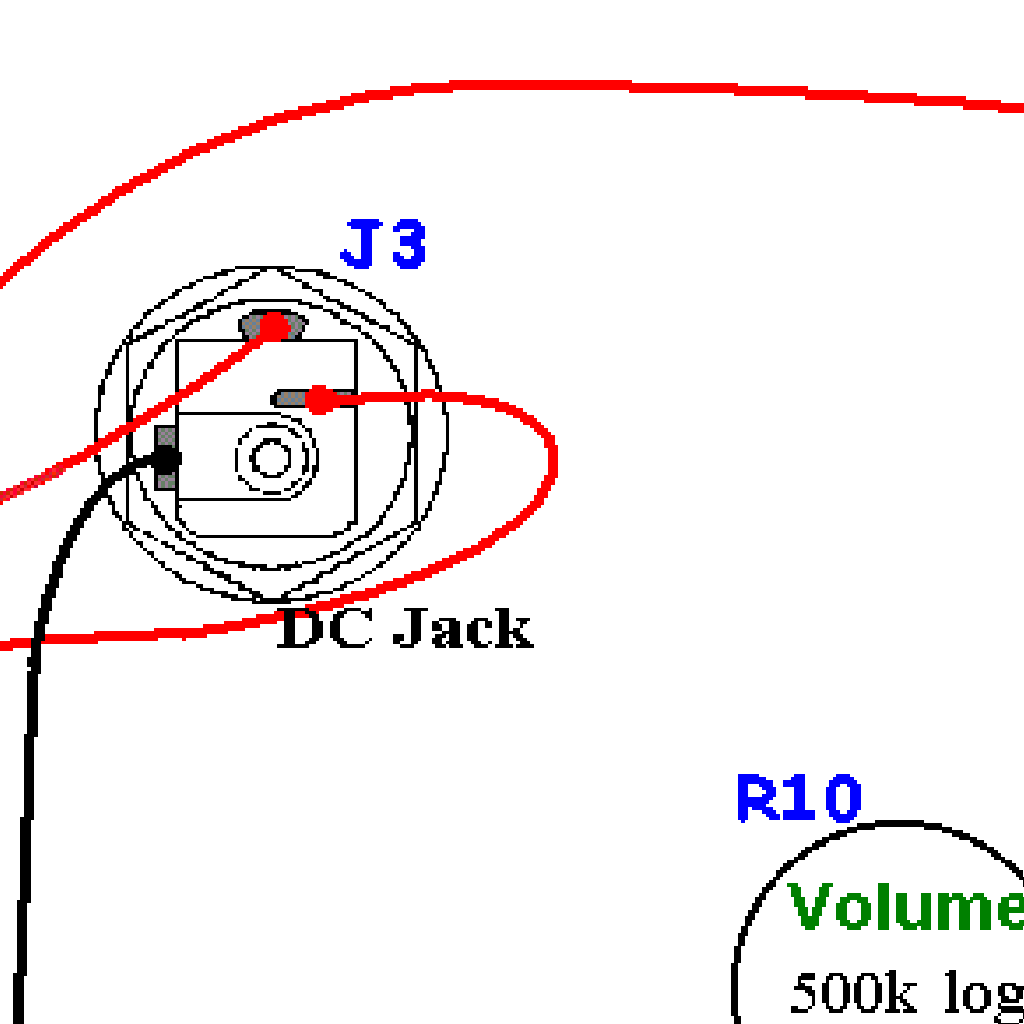
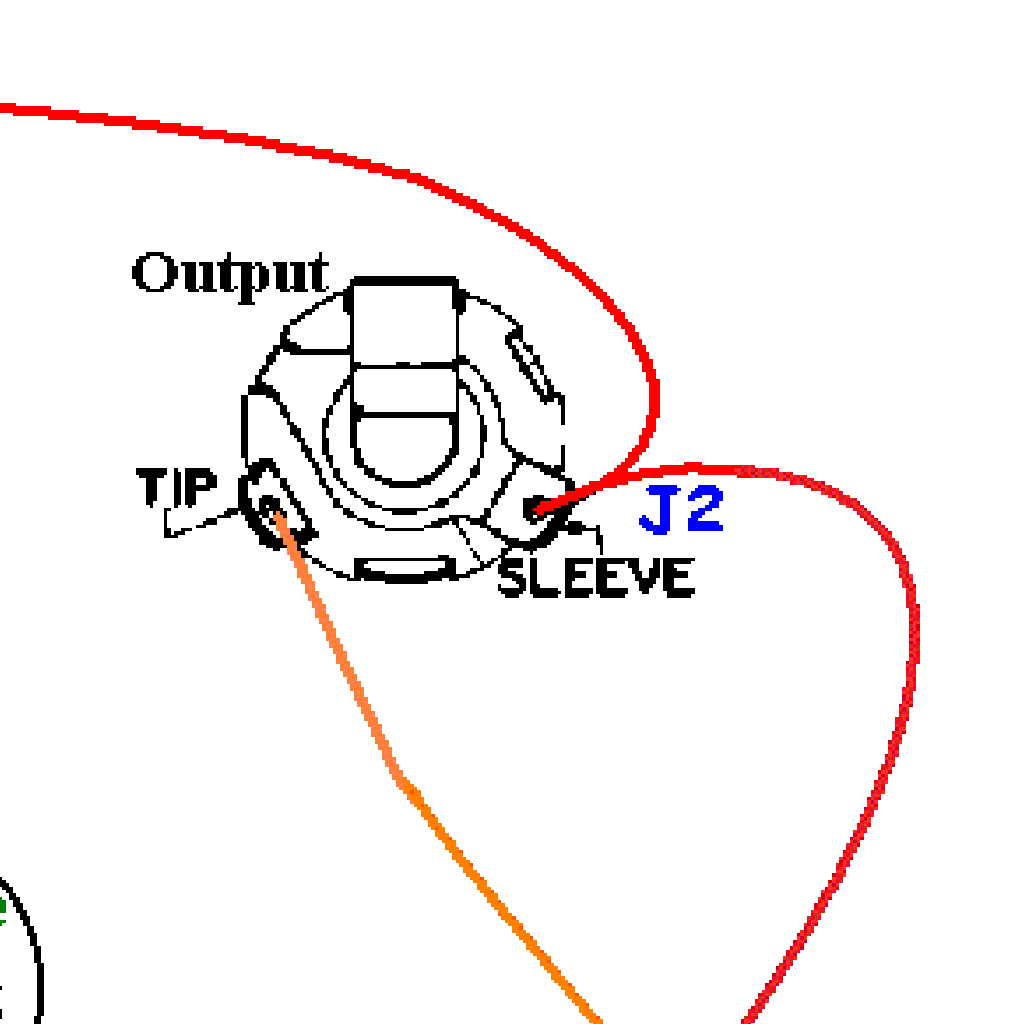
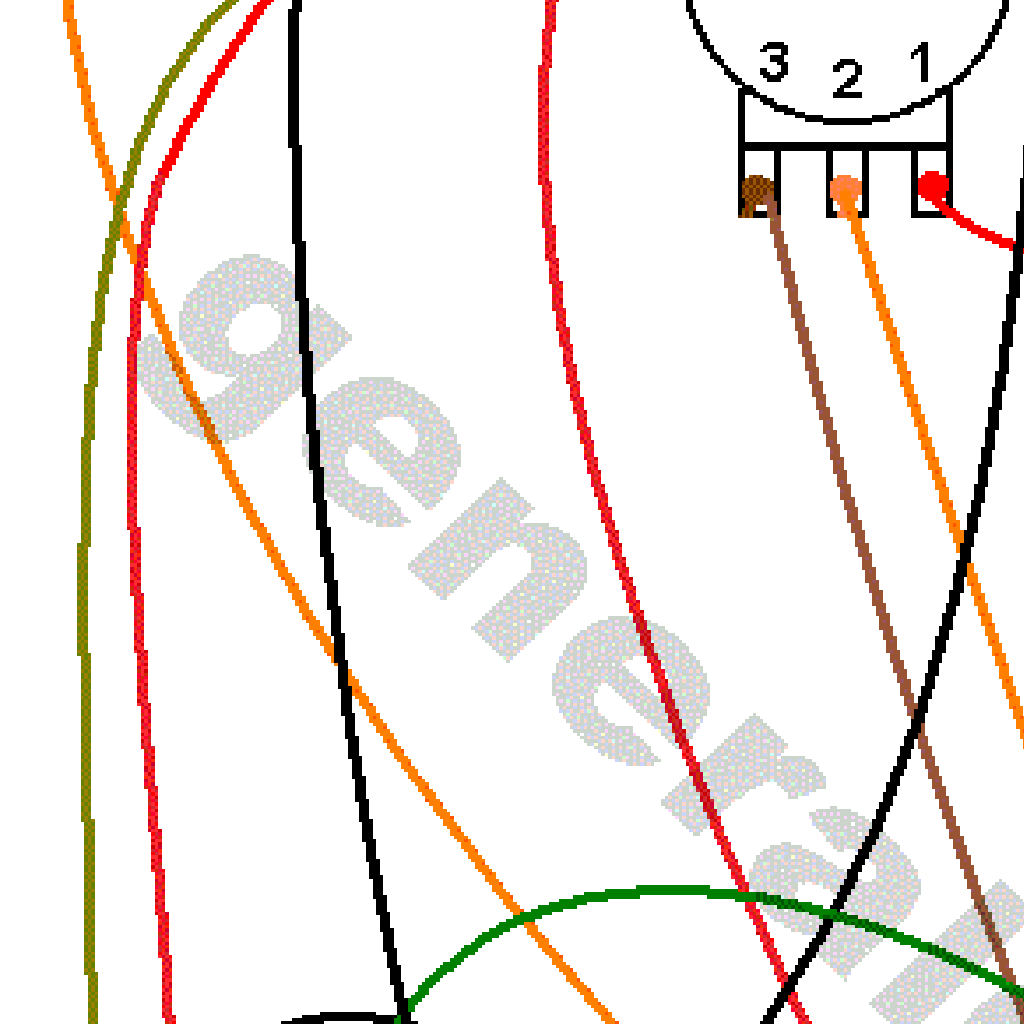
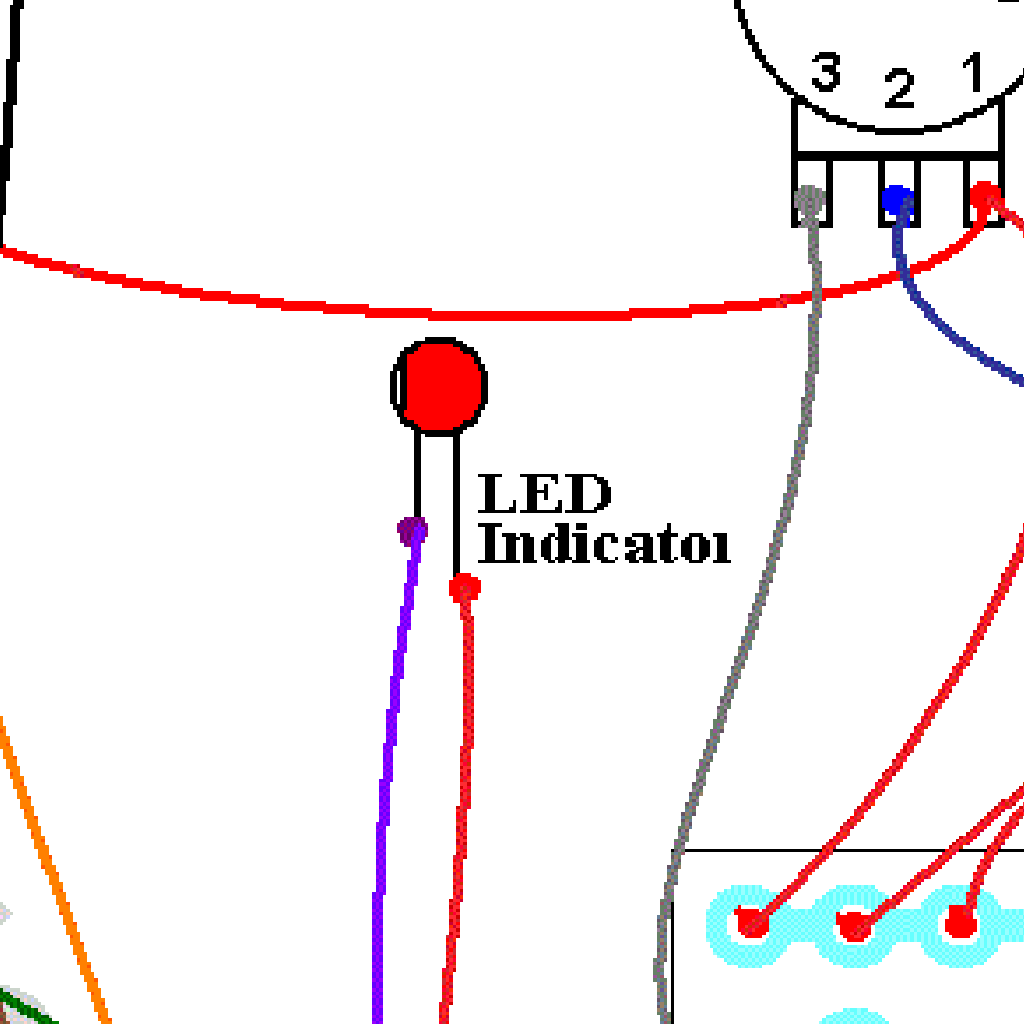
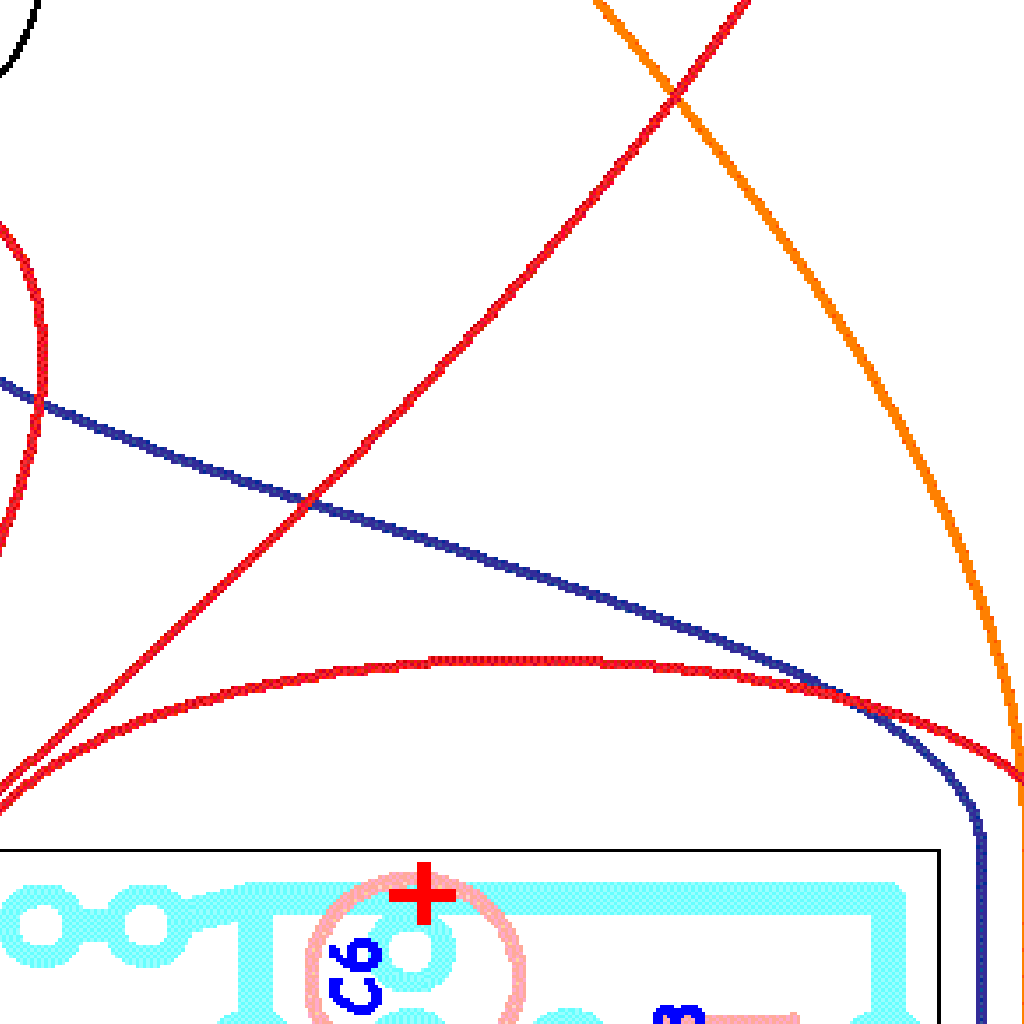
Here's the wiring diagram for the Dallas Arbiter™ Fuzz Face™ Replica with charge pump (next page).

Negative ground power to a positive ground PNP Dallas Aribiter Rangemaster™ Replica circuit.
Version 2014December30 · Copyright 2014 JD Sleep · Permission refused for posting/serving this file from any site other than www.generalguitargadgets.com · Trademarks are property of their owners
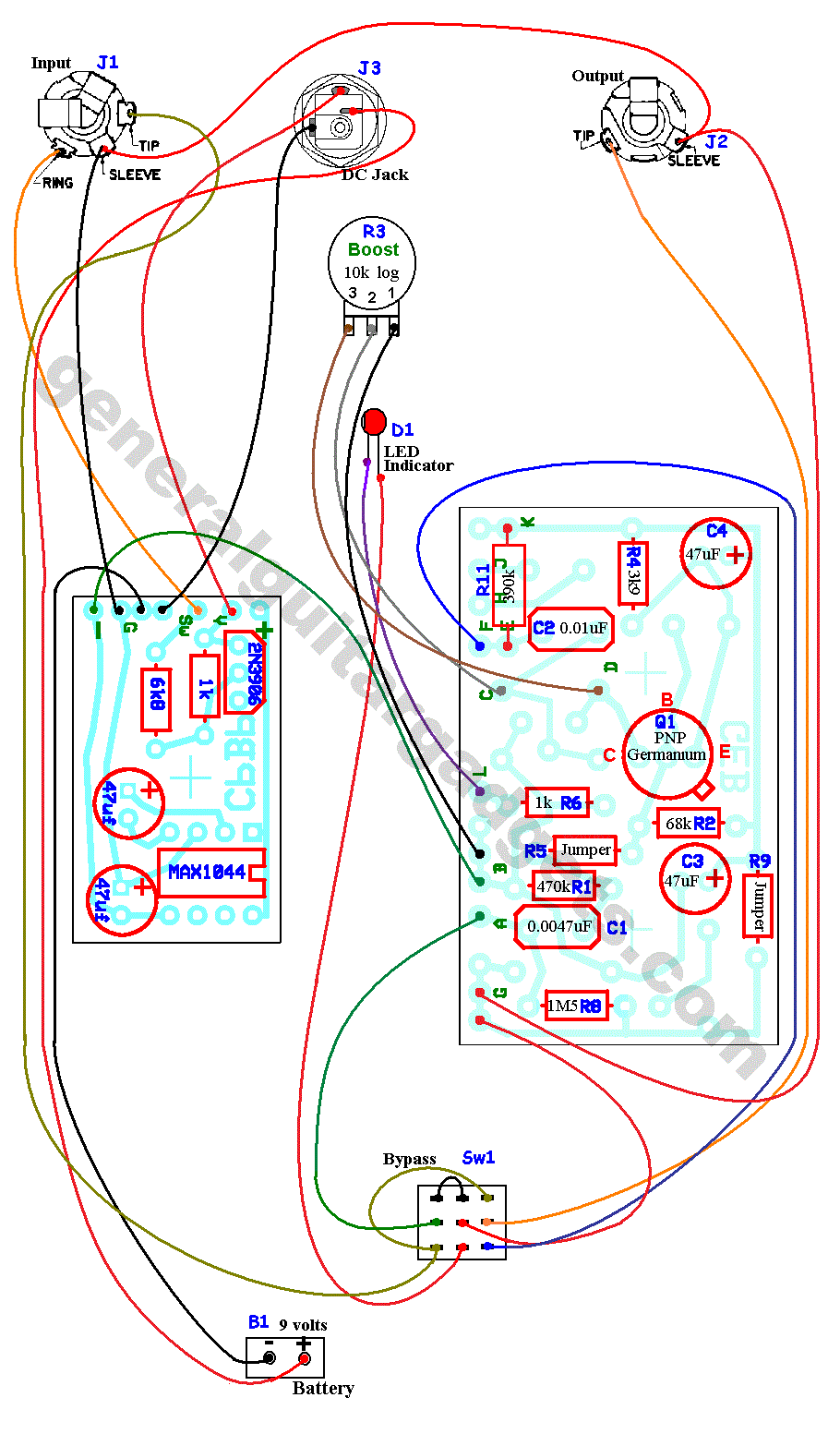
We ran across a forum post long ago where R.G. Keen suggested using a charge pump to convert the power input of a PNP circuit from positive ground to negative ground. This provides a solution for those of us who like to daisy chain a power supply to all of our stompboxes. If you've ever tried to daisy chain your modern pedals (Boss™, Ibanez™, etc) with a Fuzz Face™ (or an old 70's Big Muff Pi™ or any PNP transistor circuit pedal), you know you can't do it. Now you can! From the DC jack or battery, the charge pump circuit is a negative ground circuit. From the output of the charge pump circuit, we use the ground and -9v outputs to power the Rangemaster™. The Rangemaster™ circuit sees a positive ground (0v is more positive than -9v). So here is the solution for the GEB PNP versions in diagram and photo. This is a great “wrapper circuit” to install and probably well worth the time in the long run. Here's a photo of a Dallas Arbiter™ type Rangemaster™ replica with the charge pump.
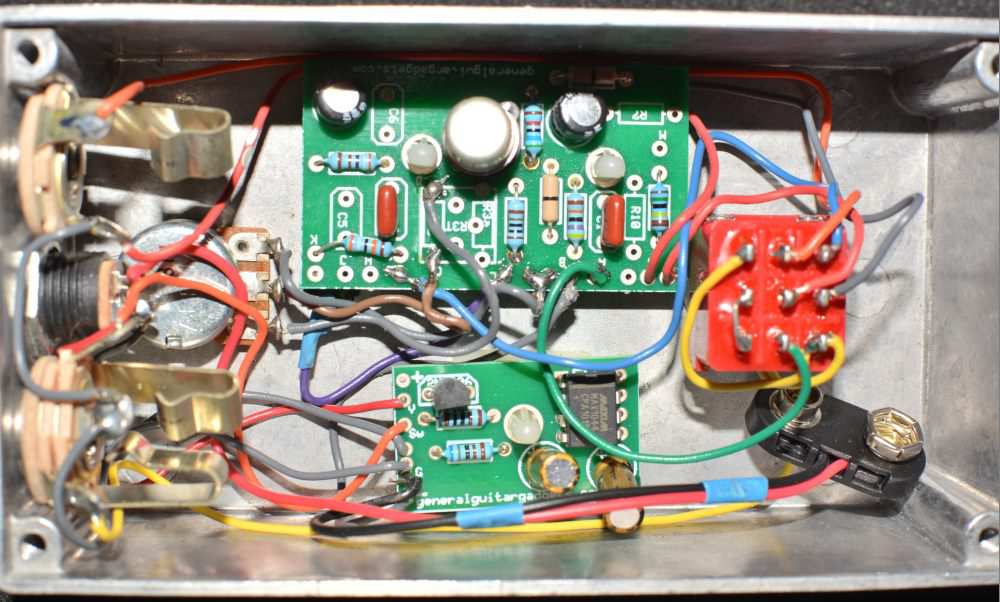
Here's the wiring diagram for the Rangemaster™ with charge pump.
Negative ground power to a positive ground PNP ColorSound™ ToneBender™ Mark II Pro Replica circuit.
Version 2015February03 · Copyright 2015JD Sleep · Permission refused for posting/serving this file from any site other than www.generalguitargadgets.com · Trademarks are property of their owners
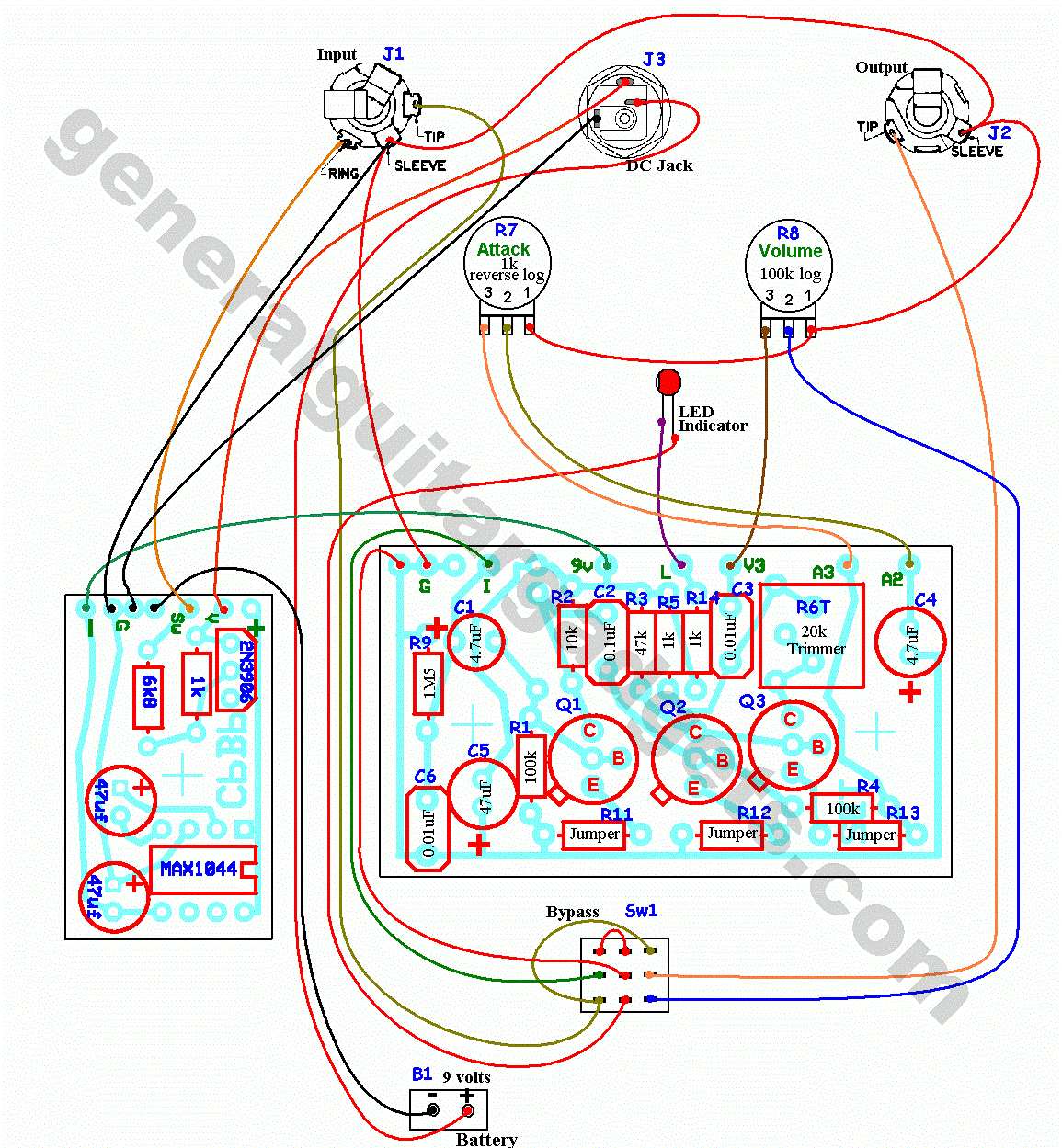
We ran across a forum post long ago where R.G. Keen suggested using a charge pump to convert the power input of a PNP circuit from positive ground to negative ground. This provides a solution for those of us who like to daisy chain a power supply to all of our stompboxes. If you've ever tried to daisy chain your modern pedals (Boss™, Ibanez™, etc) with a Fuzz Face™ (or a 70's Big Muff Pi™ or any PNP transistor circuit pedal), you know you can't do it. Now you can! From the DC jack or battery, the charge pump circuit is a negative ground circuit. From the output of the charge pump circuit, we use the ground and -9v outputs to power the ToneBender™. The ToneBender™ circuit sees a positive ground (0v is more positive than -9v). So here is the solution for the TB2 PNP versions in diagram and photo. This is a great “wrapper circuit” to install and probably well worth the time in the long run.
(Wiring diagram is on the following page)
Here's the wiring diagram for the ColorSound™ ToneBender™ Mark2 Professional Replica with charge pump (next page).
Negative ground power to a positive ground PNP ColorSound™ ToneBender™ (3-knob) Replica circuit.
Version 2014September04 · Copyright 2014 JD Sleep · Permission refused for posting/serving this file from any site other than www.generalguitargadgets.com · Trademarks are property of their owners
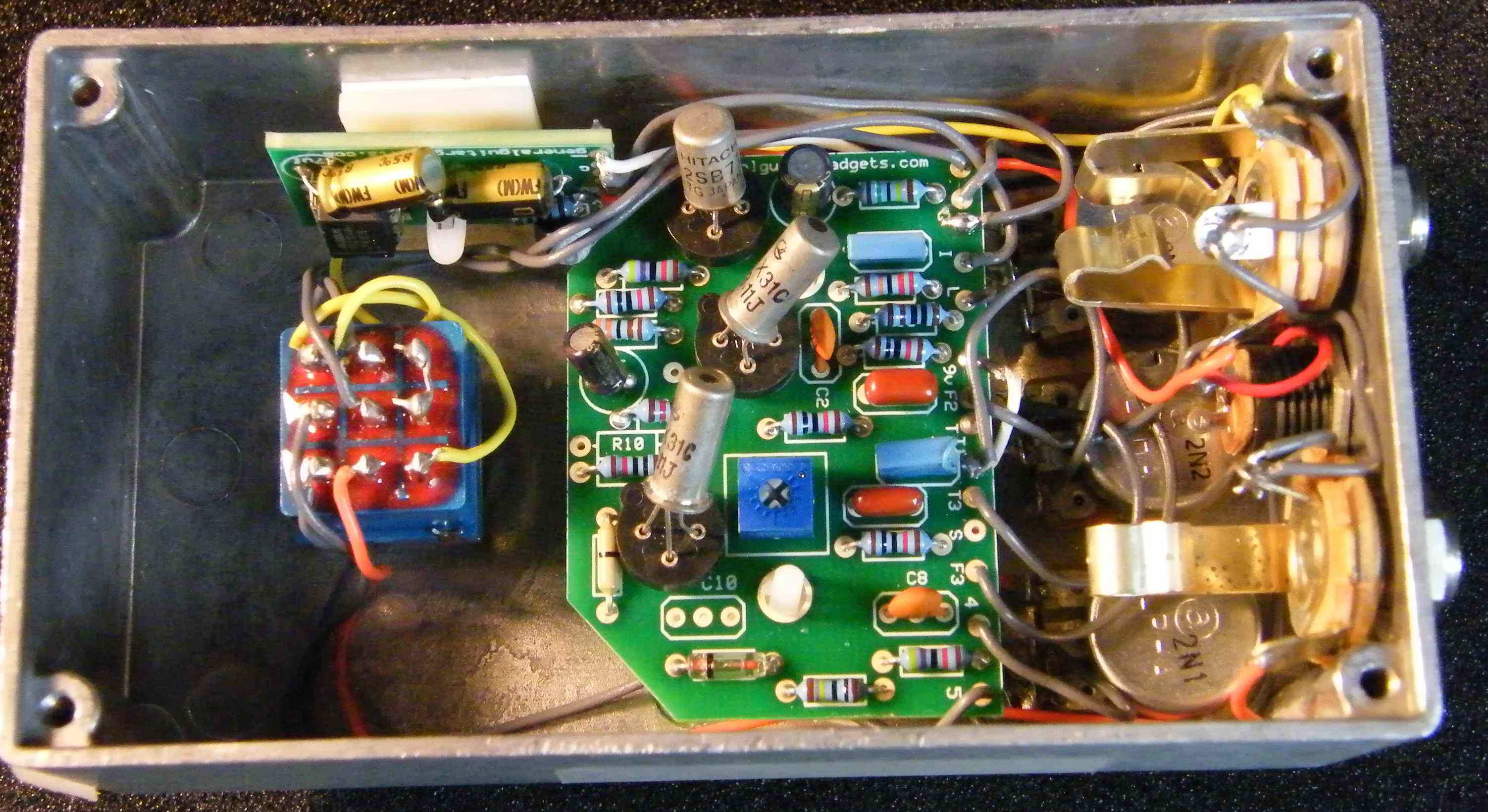
We ran across a forum post long ago where R.G. Keen suggested using a charge pump to convert the power input of a PNP circuit from positive ground to negative ground. This provides a solution for those of us who like to daisy chain a power supply to all of our stompboxes. If you've ever tried to daisy chain your modern pedals (Boss™, Ibanez™, etc) with a Fuzz Face™ (or a 70's Big Muff Pi™ or any PNP transistor circuit pedal), you know you can't do it. Now you can! From the DC jack or battery, the charge pump circuit is a negative ground circuit. From the output of the charge pump circuit, we use the ground and -9v outputs to power the ToneBender™. The ToneBender™ circuit sees a positive ground (0v is more positive than -9v). So here is the solution for the TB3 PNP versions in diagram and photo. This is a great “wrapper circuit” to install and probably well worth the time in the long run. Here's a photo of a Tone Bender™ 3 (Boutique version) replica with the charge pump.
Here's the wiring diagram for the ColorSound™ ToneBender™ 3-knob Replica with charge pump (next page).
More about this project
Notes, sounds and related links
Higher Voltage Output
Bipolar Power Output
Positive Ground Power (Some PNP Transistors Circuits)
Another good use of the Bipolar charge pump is to deliver positive ground power from a negative ground power input. If you daisy chain power to your pedal board, this will allow you to add your PNP pedals with no special power supplies. Here are some examples of this use.
Buy A Bipolar CP Kit
Buy A Bipolar CP PCB

Buy A Voltage UP CP PCB

Ready to build? We have the kit.
Buy a Charge Pump (Bipolar) Complete Kit. Includes all the parts and materials you need to build one, including the PCB. 
Would you like a Ready to Solder Circuit Board for this project (9volt Bipolar Power Charge Pump)?
Would you like a Ready to Solder Circuit Board for this project (17, 25 or 33 volt Charge Pump)?